Polio is a pretty awful disease that used to affect a large proportion of people in the US. Now, thanks to one rad dude by the name of Jonas Salk, polio is a lot less of a threat than it used to be, where it could paralyze and incapacitate people for the rest of their lives.
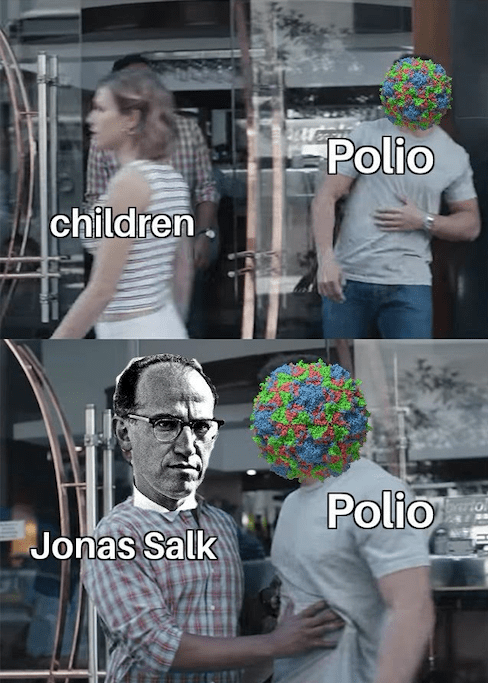
So what happened that made polio much less of a problem today? One word — VACCINES! Those handy-dandy little needles full of lifesaving goodness has kept the poliovirus in check since my man Jonas Salk developed it back in the 1950’s. So what’s the deal with the polio vaccine? How does it work, and since it obviously hasn’t eradicated polio completely, what’s happening in the not-so-wonderful world of polio now?
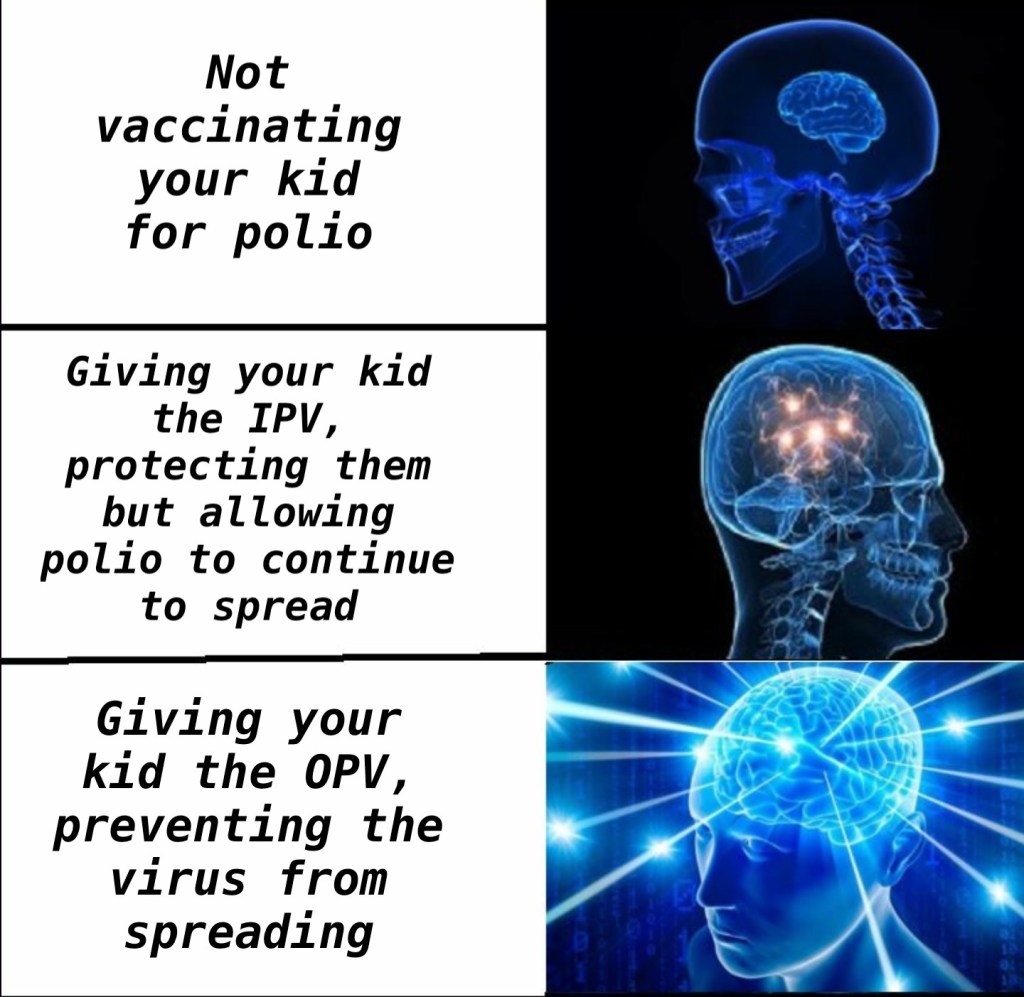
There are two types of polio vaccine: the inactivated polio vaccine (IPV) and the oral polio vaccine (OPV). The IPV is made up of inactivated polio viruses that are no longer pathogenic. These are injected into the patient, usually in a series of four injections over the course of the first 6 years of life. The OPV is drastically different in that it is administered via drops to the mouth. Both vaccines work very well, but the OPV offers better mucosal immunity, preventing the virus from entering the cells of the throat and intestinal tract to replicate. However, the OPV is an attenuated vaccine rather than inactivated, which carries its own set of problems. One problem is that, very rarely (approximately 1 patient per 2.4 MILLION doses of vaccine given), the virus used in the vaccine can mutate to become pathogenic. However, just switching over to the IPV instead of the OPV doesn’t solve the problem. Due to the fact that the polio virus replicates in the victim’s throat and intestinal lining, wild type polio can still enter the body, replicate, and spread. This isn’t a problem with the OPV, which prevents the spread of the virus, so if the goal is polio eradication (and it should be) the OPV is the way to go.
So since polio ISN’T eradicated, what the heck is going on with polio? In short, it’s not looking too good. The WHO Emergency Committee convened in December 2019 to address polio outbreaks, and in a January 2020 press release, confirmed 113 cases of polio globally, about 4x higher than the 28 confirmed in the same period the previous year. They also reported outbreaks of vaccine-derived polio infections in 7 countries since the last convention. One of those outbreaks occurred in the Philippines. In response to this outbreak, agencies in the Philippines heightened surveillance and launched field investigations in order to detect the virus and understand the scope of the outbreak. The Department of Health is reinforcing their statement that vaccination schedules should be maintained to protect from the outbreaks.
So should you be worried about polio? Odds are, no, you shouldn’t. The polio vaccine works wonders to protect from this awful and debilitating disease, so as long as you’re vaccinated, you have nothing to worry about. If you intend to help out the rest of us who would LOVE to see polio disappear in our lifetime, vaccinate you and your kids. This includes advocation for the OPV, which has been discontinued in the US. If we want to get rid of polio once and for all, the OPV needs to be instated as the standard, considering it works to prevent the spread of polio altogether.

 Microbiology with Eric