When you’re feeling lonely, just remember that you’ve got trillions of little bacteria having a grand old time living somewhere on or in your body to keep you company!
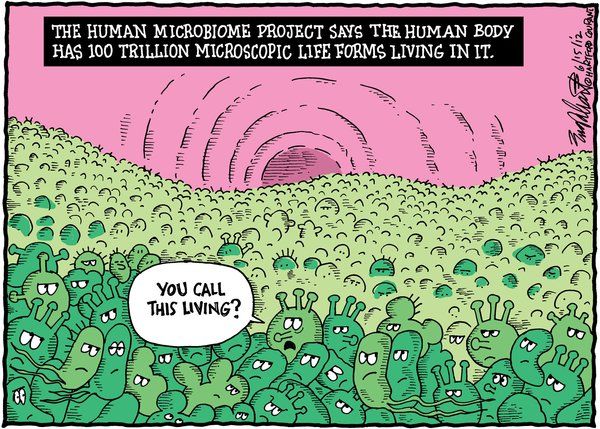
Ok, so maybe they can’t carry on a conversation or engage in a discussion about the Good Place finale, but they can do something else that’s much more useful than that. Basically every function our bodies perform is impacted in some way by our microbiome. Some of our gut bacteria help break down compounds to help our bodies digest food. Our microbiome can even impact how we experience diseases and illness.
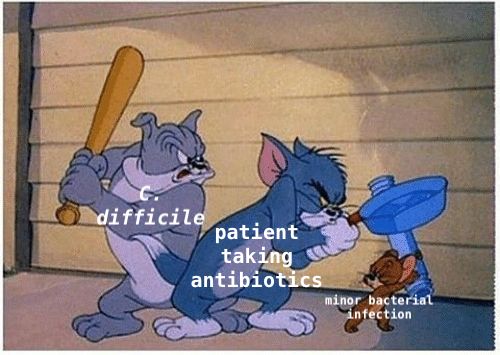
One such way that our microbiome can impact illness is through dysbiosis. Dysbiosis is when some factor like antibiotic use causes a disruption in the normal microbiota. This scenario gives way for infections by pathogens like Clostridium difficile, which causes diarrhea and a sometimes fatal inflammation of the colon. In order to treat infections by C. difficile, an article in Nature tells of a study where fecal microbiota from healthy patients was transplanted into infected patients. Despite how utterly gross it is to imagine having the bacteria from someone else’s feces put into your body, it worked phenomenally, to the point where the trial had to end because it was no longer ethical to give the control group normal antibiotic treatment!

Yes, more! An article from Gut Microbiota for Health highlights a species of gut bacteria that helps protect against the harmful byproducts of food processing. The article tells of researchers from Washington University School of Medicine that discovered Collinsella intestinalis that is able to break down a certain Maillard reaction product (MRP), e-fructoselysine (FL), into less harmful substances. For those who aren’t familiar with MRPs (like me before I read the article), MRPs form when amino acids react with reducing sugars in the presence of heat. These compounds are present in lots of processed foods, and are associated with problems like diabetes and heart disease. These researchers found that C. intestinalis uses FL as a carbon source, breaking it down into lysine, formate, and acetate, which are naturally produced by the body.
Based on that you probably want to make sure you’re taking proper care of your little buddies you’ve got living inside you. So how can you make sure your lil microscopic dudes get what they need? The most important thing you can do is know when to use antibiotics. Antibiotics can kill off a large portion of your microbiome, which makes it a lot easier for agents like C. difficile to cause an infection.
You can also help your microbiome through your diet. This article from The Conversation gives diet tips that can help improve the health of your microbiome. Their tips include eating a diet that involves a diverse range of fruits and veggies, resistant starches like potatoes and legumes, and different fibers. The article also claims that exercise is good for your microbiome due to the fact that the lactate produced helps feed certain microbes. Another good tip is consumption of probiotic foods, like kimchi, yogurt, and pickles (not combined, of course). These foods contain microorganisms to help them ferment, which when ingested are incorporated into your microbiome.
So yeah, your microbiome is pretty important. It’s important to realize just how much all those bacteria actually do for us. It’s easy to just figure our body can do everything it needs to on its own, but honestly, that’s a little egotistical. We need those bacteria to make sure we can adequately function to digest everything we eat, to protect us from harmful pathogens, and keep us in good health overall. So when you’re lonely, don’t forget about all those bacteria working to make sure you can function properly.

 Microbiology with Eric