It’s that time of year again: flu season is in full swing. As occurs every year, the flu is spreading through the US and wreaking havoc. So what’s going on this year specifically? How is this year’s flu comparing to those of the past?
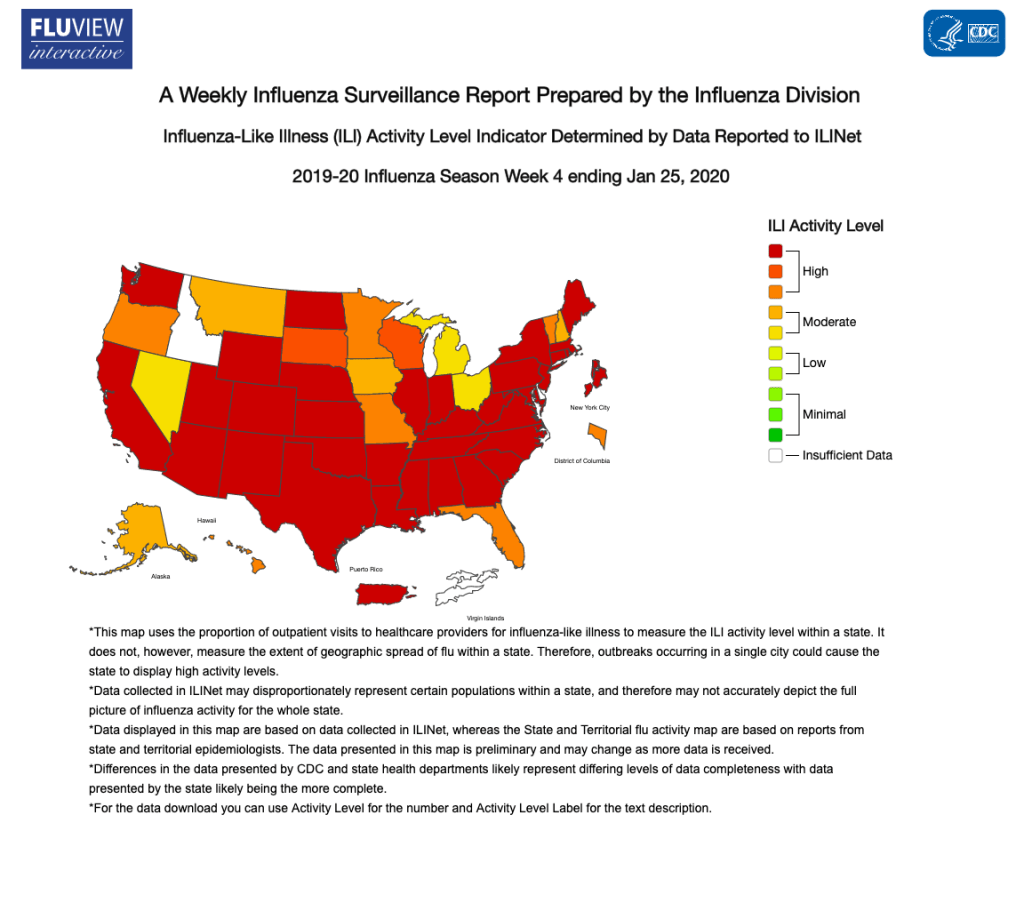
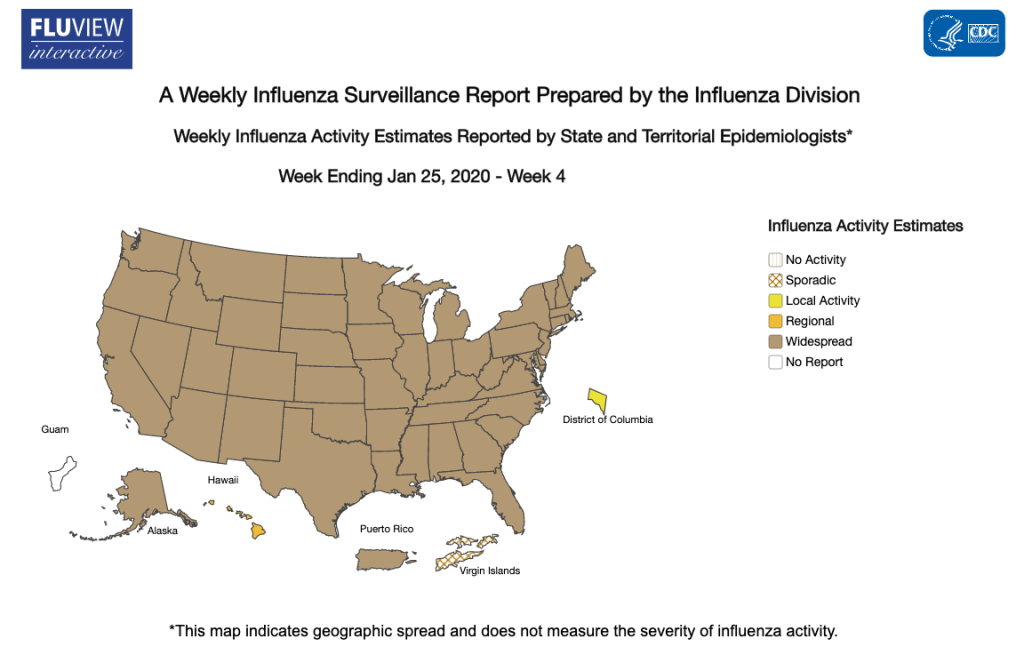
The CDC has reported that an estimated 19-26 million people have been affected by the flu this year. As reported from ILINet, as of week 4 of this flu season (ending January 25), ILI (influenza-like illness) activity is high in most states, including here in NC. In a study of how widespread cases of the flu are, every state except Hawai’i has reported widespread flu activity. Of these reported flue cases, some 8.6-12 million have resulted in medical visits. Around 180,000-310,000 have resulted in hospitalization, and an estimated 10,000-25,000 have died from the flu this season.
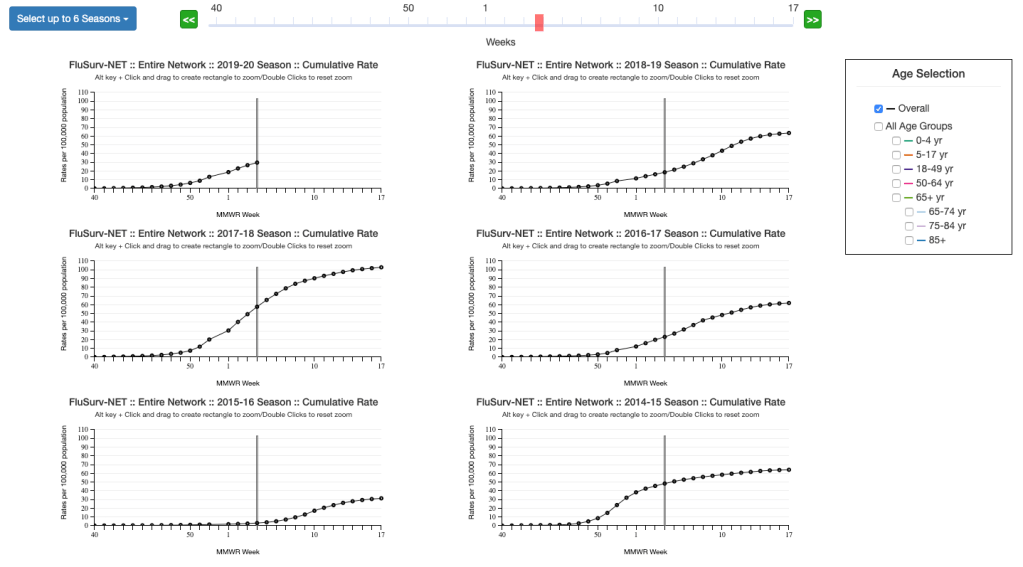
So how does all this compare to previous flu seasons? In reference to the past 6 flu seasons (starting with 2014-2015), this year’s flu is about a midpoint. As of week 4 of the season, the rate of incidence is about 29.7 per 100,000 people. As a comparison, last year at week 4, the rate of incidence was around 18.6 per 100,000, while 2 years ago saw a rate of 57.7 per 100,000. So based on this, the flu could definitely be worse, but at the same time, it could, and has been, much better, considering that at this point in the 2015-2016 season, the rate was only 3.1 per 100,000. At this point in other seasons, the slope of the curve was still on the climb, so we can only expect it to get worse from this point before it gets better. If the trend continues, based on data from previous years, the seasonal high will be around 60-70 per 100,000.
So what’s the deal with the flu this year? The first thing to look at is this year’s vaccine. This year’s vaccine covers 4 strains of the flu. But how effective is it? Due to how early it is in the season, it’s impossible for the CDC to say definitively how effective this year’s vaccine is. However, since the Southern Hemisphere’s flu season runs from about April to September, we can look there for clues as to how effective it will be in the Northern Hemisphere. According to Contemporary Clinic, there was some error in the vaccine in relation to the H3N2 strain that circulated. This led to lower vaccine effectiveness against that strain due to a mutation causing a loss in a glycosylation site. Based on this, we can expect infection rates to be a little higher than normal due to this mismatch.
I’ve never been one to worry excessively about flu season. I rarely get debilitatingly sick to begin with (knock on wood), and I try to always get vaccinated pretty early, keeping myself from contracting the flu, and if by some chance I do catch it, I know it won’t be as bad as it would be if I hadn’t gotten the vaccine. For anyone else, I highly recommend getting the flu vaccine if you’re physically capable. Not only can it prevent you from getting the flu, but you can prevent it from spreading to other people (and do you want to be responsible for getting someone sick? Do you want that on your conscience?), and even if worse comes to worst and you DO get the flu, would you rather have the flu for a few days, or a few weeks? Not really a hard question in my opinion: GET A FLU SHOT!

 Microbiology with Eric