The short answer is vaccines. PLEASE vaccinate your kids and yourself if medically possible. Vaccines aren’t whack.
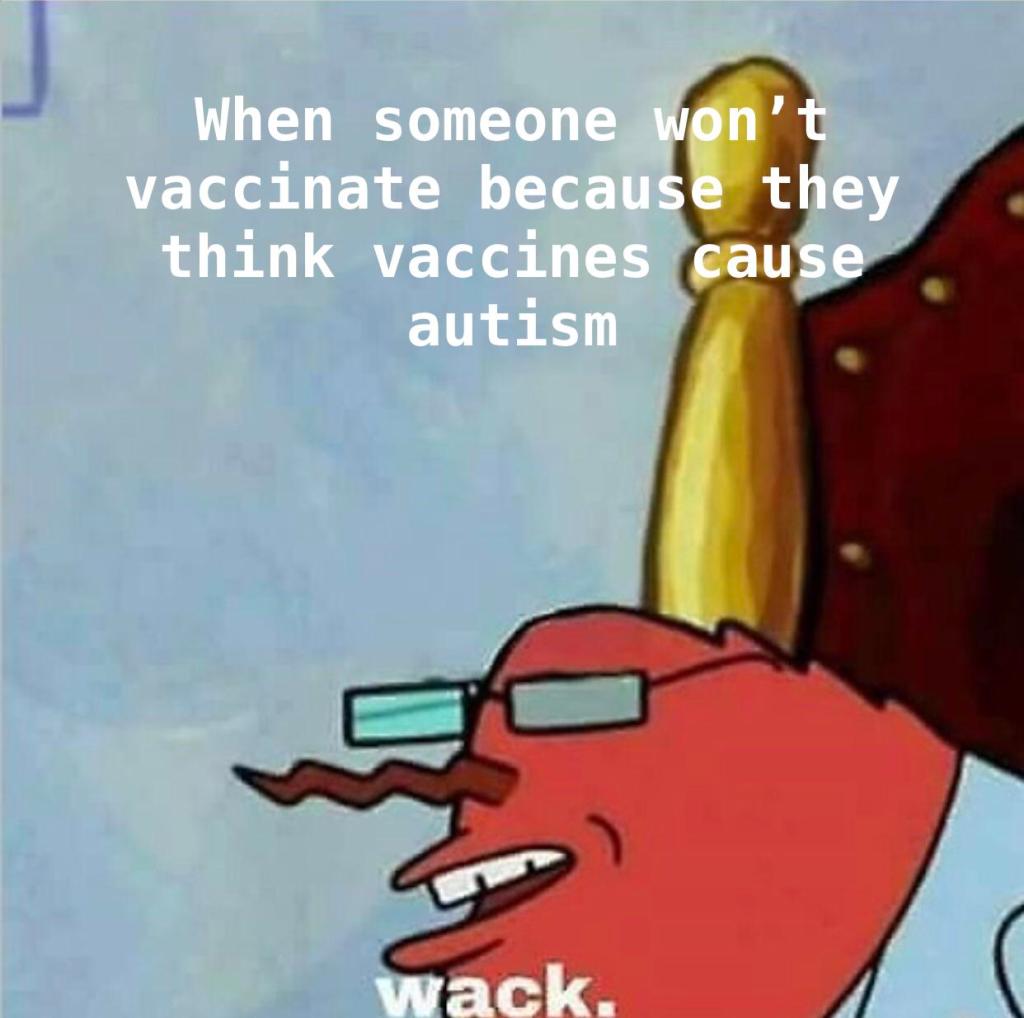
Now for the long answer: what makes people think vaccines ARE whack, and how has that impacted the world as a result.
The main outcry started back in 1998, when a man named Andrew Wakefield published a paper that suggested links between the MMR vaccine, gastrointestinal disorders, and autism. However, that article has since been retracted by Wakefield amid response from the scientific community that failed to corroborate his findings. In a paper from the journal Psychological Medicine, the researchers involved found no association between the MMR vaccine and autism, and cited 11 studies, ranging from epidemiological investigations to vaccine safety reviews to passive surveillance data with the same findings. A paper cited by Wakefield himself even shows no link between the MMR vaccine and autism.
So how did Wakefield’s study go wrong? One potential problem lies within his research sample. Wakefield sampled only 12 children, all of whom had histories of developmental disorder. Additionally, all of his sample patients were consecutively admitted to the same hospital. From a statistics standpoint, this methodology is a nightmare. When conducting research of any kind, you need a large random sample in order to determine the significance of your research. 12 subjects is by no means considered large, and selecting all your patients from the same facility that were consecutively admitted is far from random selection. This sort of statistical malpractice likely contributed to his false data. The study cited by Wakefield that appears to refute his own claims used a sample size of 770 children with neurodegenerative disorders, only 16 of which had received the measles vaccine within 7-14 days of the onset of illness. This study, much more statistically sound, found no link between the vaccine and the onset of autism.
Oh, but that’s not where the problems with Wakefield’s paper end. Wakefield had partnered with a lawyer who had been trying to sue a vaccine manufacturer. This lawyer had been sending Wakefield patients with symptoms of Crohn’s disease (targeted toward families with children with neurological disorders) and his firm had been paying Wakefield £150 an hour, plus expenses, for the two years leading up to Wakefield’s publication. It’s evident that Wakefield was in this lawyer’s pocket, valuing the potential profit of the situation rather than doing what is scientifically ethical. In order to help this lawyer pursue his lawsuit, Wakefield distorted and falsified data. He reportedly claimed that the symptoms of one of the children used in the study appeared later than actually reported by the child’s parent due to the fact that the symptoms actually first appeared a month before the child received the MMR vaccine, and upon investigation, the cases described in the paper supposedly don’t match up with the child, as was the case with child 2 in Wakefield’s study.
So how has this dubious paper changed the attitudes of the general public in regards to the MMR vaccine? It doesn’t look too good. A 2003 paper found that, since Wakefield’s study was published in 1998, there has been a sharp decline in % coverage by the MMR vaccine. According to said paper, the vaccination rate was climbing toward a maximum, and vaccination rates discrepancies between affluent and deprived areas were equalizing.
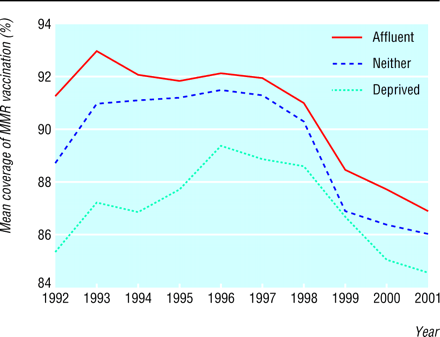
However, once Wakefield published that awful paper, everything started to go downhill. The rates are now below what the WHO recommends to be within the threshold for herd immunity to be effective in preventing spread to those who can’t be vaccinated. This poses a serious problem for immunocompromised individuals who can’t be vaccinated, as the ones who were supposed to protect them have abandoned the responsibility. Wakefield’s paper and the subsequent response shows us that we have to be extremely careful in what information we take in as fact. It’s important to look deeper at the potential ulterior motives one might have for publishing something, and do extensive research to corroborate those findings.

 Microbiology with Eric